Mastering Plant Care: Dealing with Monstera Plant Yellow Leaves
Monstera plants, with their signature Swiss cheese-like leaves, have become a popular choice among plant enthusiasts. These tropical beauties add an appealing touch of the exotic to any indoor or outdoor space. This section provides an understanding of Monstera plants and outlines their basic care requirements.
Understanding Monstera Plants
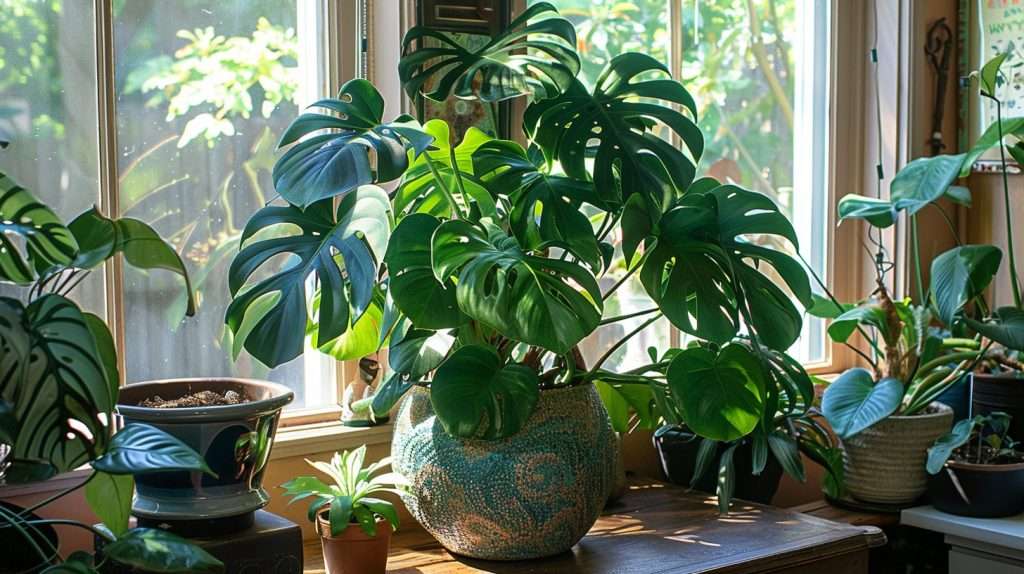
Native to the tropical regions of Central and South America, Monstera plants are members of the Araceae family. They are climbing plants in their natural habitat, using aerial roots to latch onto trees and grow towards the sunlight. The most commonly known species is Monstera Deliciosa, known for its large, glossy green leaves with distinctive splits and holes.
The “Swiss cheese plant” nickname comes from the unique fenestrations (openings or “windows”) in their leaves, which develop as the plant matures. The characteristic split-leaf pattern is a natural adaptation that allows sunlight to pass through to the lower leaves in dense tropical forests. However, there are several different monstera deliciosa varieties, each with its own distinct leaf patterns and growth habits.
Basic Care for Monstera Plants
Monstera plants are generally easy to care for, making them an excellent choice for beginners and seasoned plant lovers alike. Their basic care involves a balance of the right light, water, and soil conditions.
Light Requirements: Monsteras prefer bright, indirect light. Too much direct sunlight can cause the leaves to burn, while too little light can stunt growth and prevent the development of the plant’s signature leaf fenestrations.
Watering Practices: Monsteras like their soil to dry out between waterings. Overwatering can lead to root rot, a common issue that can lead to yellow leaves in monstera plants.
Soil Conditions: A well-draining soil mix is essential for Monsteras. They prefer a loose, peat-based potting mix that allows water to drain freely, preventing waterlogged roots.
Temperature and Humidity: As tropical plants, Monsteras appreciate warm temperatures and high humidity. They thrive in temperatures between 65°F and 85°F and prefer humidity levels above 50%.
Pruning and Propagation: Regular pruning can help maintain a Monstera’s size and shape. Also, propagation is relatively easy and allows for sharing the Monstera love with friends and family.
Understanding these basics is the first step in ensuring that your Monstera stays healthy and vibrant. For a more in-depth guide on caring for your Monstera, check out our article on monstera plant care.
Addressing Monstera Plant Yellow Leaves

If you’re noticing yellow leaves on your Monstera plant, it’s not a cause for panic, but it is a sign that your plant might be distressed. Understanding the possible causes of yellow leaves and how they impact your Monstera can help you take prompt action to restore your plant’s health.
Possible Causes of Yellow Leaves
Yellowing leaves in Monstera plants, often referred to as “chlorosis“, can be triggered by several factors. Here are some of the most common causes:
- Overwatering or Underwatering: Both can stress the plant, leading to yellow leaves. Overwatering can cause root rot, depriving the plant of oxygen. Conversely, underwatering can leave the plant dehydrated and unable to carry out photosynthesis effectively.
- Inadequate Light: Monsteras need bright, indirect light. Too much direct sunlight can scorch the leaves, causing them to turn yellow. On the other hand, insufficient light can hinder photosynthesis, leading to yellow leaves.
- Nutrient Deficiency: Lack of certain nutrients, particularly nitrogen, can result in yellow leaves. The plant needs these nutrients for photosynthesis and growth.
- Temperature Stress: Monsteras prefer stable, warm temperatures. Fluctuations or extremes in temperature can cause the leaves to yellow.
- Poor Soil Quality: Monsteras need well-draining soil. If the soil is too compact or doesn’t drain well, it can lead to waterlogging and root rot, resulting in yellow leaves.
- Pests or Disease: Certain pests or diseases can cause yellow leaves. If you notice any abnormalities besides the yellowing, such as spots or insects, it might be worth investigating further.
How Yellow Leaves Impact the Plant
While a few yellow leaves aren’t necessarily a sign of a serious problem, they indicate that the plant is under stress. If left untreated, the issue can hamper the plant’s growth, lead to more yellow leaves, or cause further damage such as brown spots, wilting, or even plant death.
Yellow leaves themselves don’t perform photosynthesis efficiently, which means that the plant’s ability to produce food is compromised. This can affect the overall health and vitality of the plant.
If you’re noticing yellow leaves on your Monstera, it’s crucial to identify the underlying issue and address it promptly. In most cases, adjusting care practices can help return your Monstera to optimal health. For more information on how to care for your Monstera, check out our comprehensive guide on monstera plant care.
Environmental Factors
When it comes to the health of a Monstera plant, it’s essential to consider various environmental factors. These include light, water, and soil conditions, all of which can impact the appearance and overall health of the plant, including the issue of yellow leaves.
Light Requirements and Yellow Leaves
Monstera plants thrive best in bright, indirect light. Too much direct sunlight can burn the leaves, causing them to turn yellow. Conversely, inadequate light can also cause yellowing of the leaves as the plant struggles to photosynthesize.
If your Monstera is experiencing yellow leaves, examine its current light conditions. Remember, an east or north-facing window typically provides the perfect amount of indirect sunlight for these plants. For more information on proper lighting for your Monstera, check out our article on monstera plant indoor care.
Watering Practices and Yellow Leaves
Watering practices greatly influence the state of a Monstera plant’s leaves. Overwatering and underwatering can both lead to yellow leaves. Overwatering causes the root system to become waterlogged, leading to root rot, while underwatering leaves the plant dehydrated.
The key to proper watering is balance. Monstera plants prefer soil that is consistently moist but not waterlogged. To achieve this, water the plant thoroughly, allowing the water to drain out the bottom of the pot, then let the top inch of soil dry out before watering again. If you’re unsure about your watering practices, our monstera plant care guide provides more in-depth guidance.
Soil Conditions and Yellow Leaves
The soil your Monstera is planted in also plays a significant role in the health of the plant. Monstera plants prefer well-draining soil that is rich in organic matter. If the soil is too dense or poor in nutrients, it can lead to yellow leaves.
If your Monstera’s leaves are turning yellow, check the state of the soil. It should be well-draining and rich in organic matter. If needed, consider repotting your Monstera in fresh, nutrient-rich soil. If you’re new to this, our guide on monstera propagation can give you a head start.
In conclusion, addressing the environmental factors that influence your Monstera plant’s health can go a long way in preventing and treating yellow leaves. By providing the right light conditions, practicing appropriate watering techniques, and ensuring optimal soil conditions, you can help your Monstera plant thrive and maintain its lush, green leaves.
Nutritional Factors
When it comes to addressing the issue of yellow leaves in monstera plants, it’s important not to overlook the role of nutrition. Nutrient deficiencies can often result in yellowing leaves, and understanding the importance of proper fertilization is key to maintaining a healthy monstera plant.
Nutrient Deficiencies Resulting in Yellow Leaves
Nutrient deficiencies are a common cause of yellow leaves in monstera plants. These deficiencies can result from inadequate feeding or problems with the plant’s ability to absorb nutrients from the soil.
Three primary nutrients are essential for monstera plant health: Nitrogen (N), Phosphorus (P), and Potassium (K). A deficiency in any of these nutrients can lead to yellowing leaves.
- Nitrogen deficiency often results in an overall yellowing of the leaves, starting with the older, lower leaves.
- Phosphorus deficiency can cause leaf tips to turn yellow or brown and eventually lead to leaf drop.
- Potassium deficiency can cause yellowing along the leaf edges and tips.
| Nutrient | Deficiency Symptoms |
|---|---|
| Nitrogen (N) | Overall yellowing of the leaves, starting with older, lower leaves |
| Phosphorus (P) | Leaf tips turn yellow or brown; may lead to leaf drop |
| Potassium (K) | Yellowing along leaf edges and tips |
Importance of Fertilizer for Monstera Plants
Fertilizing your monstera plant is crucial in ensuring it gets the necessary nutrients. A balanced fertilizer, typically with equal amounts of Nitrogen, Phosphorus, and Potassium, is often recommended for monstera plants.
Fertilizing should be done during the growing season (spring and summer) and less often during the dormant period (fall and winter). Over-fertilizing can lead to nutrient burn, which can also cause leaves to yellow or develop brown spots.
It’s important to remember that while fertilizer provides essential nutrients, it’s not a cure-all. Proper light, water, and soil conditions are also crucial in maintaining a healthy monstera. For more information on the overall care of your monstera plant, refer to our guide on monstera plant care.
Remember, a healthy monstera is a happy monstera. By addressing nutritional factors, you can help ensure your monstera plant stays green and vibrant.
Steps to Revive a Monstera with Yellow Leaves
If your Monstera plant has yellow leaves, don’t despair! There are several steps you can take to revive your plant and restore its vibrant green color.
Adjusting Light and Water Conditions
When dealing with yellow leaves on Monstera plants, the first step is to adjust the light and water conditions.
Monsteras require bright, indirect light to thrive. If the plant is receiving too much direct sunlight, its leaves can turn yellow and burn. Similarly, insufficient light can also lead to yellow leaves. Therefore, it’s important to find a balance and provide your Monstera with the right amount of light. You can learn more about the optimal lighting conditions for Monstera plants in our monstera plant indoor guide.
Overwatering is another common cause of yellow leaves in Monsteras. To prevent this, you should let the top inch of soil dry out before watering your plant again. If you notice that your plant’s leaves are yellow and wilting, it could be a sign of overwatering. In contrast, under-watered Monsteras may also display yellow leaves, but they will appear dry and crispy.
Improving Soil Quality
The quality of the soil can greatly impact the health of your Monstera. Good quality, well-draining soil is essential for preventing yellow leaves. If the soil is too heavy or waterlogged, the roots can become suffocated and start to rot, leading to yellow leaves.
To improve the soil quality, you can add organic matter like compost or peat moss to increase its ability to retain moisture while also promoting drainage. This can be particularly beneficial for indoor Monsteras, as they are often grown in pots and may not have access to the natural nutrients found in outdoor soil. For more information, check out our article on monstera plant care.
Addressing Nutrient Deficiencies
Nutrient deficiencies can also cause yellow leaves in Monstera plants. Monsteras require a range of essential nutrients, including Nitrogen, Phosphorus, and Potassium, as well as trace elements like Iron, Magnesium, and Zinc. If your plant is lacking any of these nutrients, it may start to display yellow leaves.
Applying a balanced, slow-release fertilizer can help to address these nutrient deficiencies and restore the health of your plant. Be sure to follow the instructions provided with the fertilizer to prevent over-fertilization, which can cause further damage to your plant.
By taking these steps to adjust the light and water conditions, improve the soil quality, and address any nutrient deficiencies, you can help your Monstera recover from yellow leaves and return to its vibrant, healthy state. Remember, plant care is a learning process, so don’t be discouraged if you encounter a few yellow leaves along the way. With a bit of patience and care, your Monstera will be back to its lush, green self in no time.
Preventing Yellow Leaves in the Future
While it’s essential to know how to treat yellow leaves on your Monstera plant, prevention is always the best strategy. By maintaining a regular care routine and being mindful of the early signs of plant stress, you can keep your Monstera looking vibrant and healthy.
Regular Care Routine for a Healthy Monstera
A proper care routine is key to keeping your Monstera plant healthy and preventing yellow leaves. This includes providing the right amount of light, water, and nutrients.
- Light: Monsteras thrive in bright, indirect light. Too much direct sunlight can scorch the leaves, while too little light can lead to leggy growth.
- Water: Overwatering is a common cause of yellow leaves in Monsteras. Keep the soil moist, but not soggy, and make sure the pot has good drainage.
- Nutrients: Regular feeding with a balanced fertilizer can help keep your Monstera healthy. However, avoid over-fertilizing as this can lead to nutrient burn and yellow leaves.
For more detailed information on how to care for your Monstera, check out our Monstera plant care guide.
Signs to Look Out for Before Leaves Turn Yellow
Before the leaves of a Monstera plant turn yellow, there are usually signs of distress that can alert you to potential problems. Here are a few symptoms to be aware of:
- Wilting: If your Monstera begins to wilt despite adequate watering, it may be a sign of root rot caused by overwatering.
- Brown tips or edges: This could indicate underwatering or low humidity.
- Slow growth or small leaves: This could be a sign of inadequate light or nutrient deficiency.
- Spots or patches on leaves: This could indicate a disease or pest infestation.
By catching these signs early, you can adjust your care routine before your Monstera’s leaves start to turn yellow. Remember, plants often communicate their needs through subtle changes in their appearance or growth patterns. Keep a close eye on your Monstera and respond to any signs of distress promptly to keep it in peak condition. For more tips on keeping your Monstera healthy, check out our guides on Monstera propagation and Monstera plant pruning.