The Secret to a Happier Home: 3 Pothos Plant Benefits Unveiled
Let’s dive into the world of houseplants, specifically focusing on the pothos plant. This easy-to-care-for plant not only adds a splash of green to your home but also offers a myriad of Pothos plant benefits that you might not be aware of.
What is a Pothos Plant?
A pothos plant, scientifically known as Epipremnum aureum, is a popular houseplant known for its lush, trailing vines adorned with heart-shaped leaves. Depending on the variety, the leaves can be solid green or variegated with patches of yellow or white. Pothos plants are native to the Solomon Islands but have spread worldwide due to their adaptability and low-maintenance nature.
These plants are known for their hardiness, making them an excellent choice for beginners or those who might not have a green thumb. They can thrive in various light conditions and are forgiving when you forget to water them occasionally. For more detailed information about caring for your pothos, check out our article on pothos plant care.
Why Choose Pothos for Your Home?
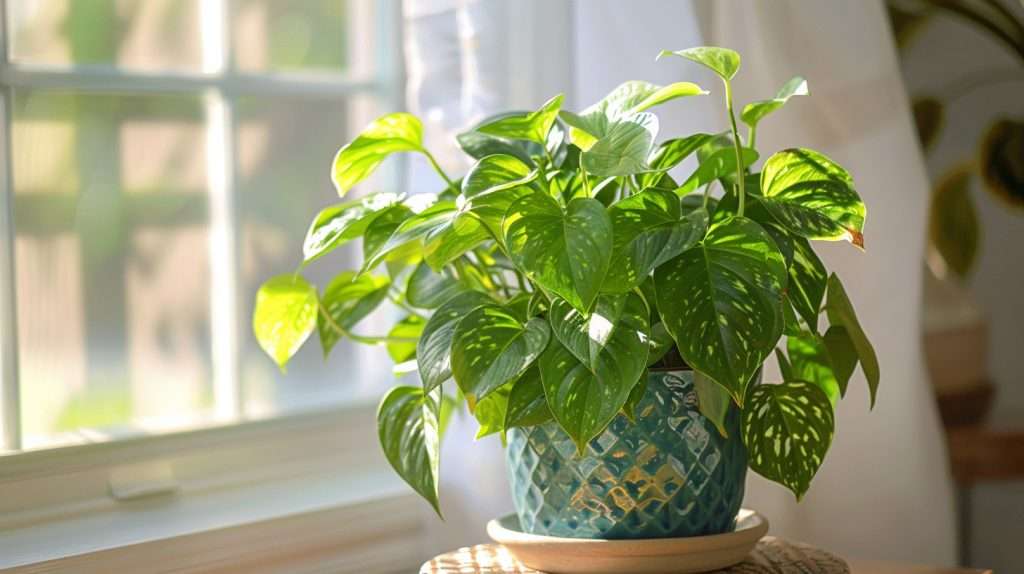
The reasons for choosing a pothos plant for your home are numerous. First and foremost, pothos plants are incredibly versatile. You can let them trail from a hanging basket, train them to climb a trellis, or even let them grow along bookshelves or window sills.
But the advantages of pothos extend beyond their aesthetic appeal. One of the key pothos plant benefits is its ability to purify the air. This plant can help remove toxins like formaldehyde and benzene from your home’s environment, promoting healthier air for you and your family.
In addition to improving air quality, having a pothos plant around can also boost your mood and productivity. The presence of greenery has been linked to reduced stress levels, improved mood, and increased concentration and productivity.
Furthermore, the pothos plant is an excellent choice for those who want to enjoy the benefits of houseplants but don’t have a lot of time for maintenance. This plant is hardy, adaptable, and can thrive even with some neglect. If you’re interested in learning about different varieties of this plant, visit our article on types of pothos plants.
In conclusion, a pothos plant is not only a beautiful addition to your home but also a beneficial one. It’s a plant that asks for little but gives back much, making it a worthy addition to your indoor plant collection.
Pothos Plant Benefits
The pothos plant, beyond its aesthetic appeal, offers a range of benefits that can enhance your living environment significantly. Let’s explore some of these key pothos plant benefits.
Improving Air Quality
One of the most notable advantages of having a pothos plant in your home is its ability to purify the air. Pothos plants are known for their air-purifying properties, helping to remove toxins such as formaldehyde, benzene, and xylene from the air. This can help to improve indoor air quality, making the environment healthier for you and your loved ones.
Boosting Mood and Productivity
Pothos plants not only help clean the air but also have the potential to boost your mood and productivity. The presence of greenery in your living space can create a calming ambiance, reducing stress and promoting relaxation. Additionally, caring for a plant like pothos can provide a sense of accomplishment, which can positively affect your mood. The lush green appearance of the pothos can also stimulate mental focus and productivity, making it a great addition to workspaces.
Easy Care and Maintenance
When it comes to care and maintenance, the pothos plant is a winner. Known for its hardiness, pothos can thrive in a variety of indoor conditions, making it an ideal choice for novice plant owners or those who are often busy. It requires minimal watering, can tolerate low light conditions, and is resistant to most common plant diseases. This low-maintenance nature is one of the key pothos plant benefits that make it a popular choice for indoor gardening. For more information on how to care for your pothos plant, check out our guide on pothos plant care.
From improving air quality to boosting mood and being easy to care for, the benefits of pothos plants are plentiful. By incorporating this plant into your living space, you can enjoy a greener, healthier, and more serene environment. And with the wide range of varieties of pothos plants available, you’re sure to find one that perfectly fits your aesthetic preferences and care capabilities.
Different Varieties of Pothos
Pothos, also known as Devil’s Ivy, is a versatile houseplant loved for its easy care and beautiful foliage. But did you know there are several varieties of pothos, each with its unique features? Let’s delve into the world of pothos and explore the Golden Pothos, Marble Queen Pothos, and Neon Pothos.
Golden Pothos
The Golden Pothos, also known as Epipremnum aureum, is one of the most common varieties of pothos. It’s named for its beautiful, heart-shaped leaves adorned with streaks of golden yellow. This variety is particularly hardy and can adapt to a range of light conditions, making it a perfect choice for beginners.
Golden Pothos is not just a pretty face, it’s also one of the best plants for improving indoor air quality. This variety is known for its ability to filter out common pollutants from the air, contributing to the many pothos plant benefits you can enjoy.
Marble Queen Pothos
The Marble Queen Pothos stands out for its stunning variegated leaves, which are a mix of white and green. This variety is slightly more demanding than the Golden Pothos, requiring bright, indirect light to maintain its beautiful variegation.
The Marble Queen Pothos is a slower grower compared to other pothos varieties, but it’s well worth the wait. Its striking appearance can add a touch of elegance to any space. For more information on how to care for this and other variegated pothos varieties, check out our guide on variegated pothos varieties.
Neon Pothos
If you’re looking to add a pop of color to your indoor garden, the Neon Pothos is the plant for you. This variety is known for its vibrant, neon-green leaves that can brighten up any room. Despite its unique color, the Neon Pothos is just as easy to care for as the more common Golden Pothos.
Just like other pothos varieties, the Neon Pothos is an excellent air purifier. Plus, this plant can boost your mood with its bright and cheerful foliage.
When choosing a variety of pothos for your home, consider your light conditions, care capabilities, and personal preferences. Each variety offers its unique aesthetic and functional benefits, making pothos an excellent plant choice for any home. For more insights on how to care for these and other pothos varieties, explore our comprehensive guide on pothos plant care.
How to Care for Your Pothos
Caring for a pothos plant isn’t a strenuous task. With just a few simple tips, you can ensure that your green friend thrives. In this section, we’ll explore the ideal environment for a pothos plant, watering techniques, and tips for pruning and propagation.
Ideal Environment for Pothos
Pothos plants are quite adaptable and can thrive in a variety of environments. However, for optimal growth, you should aim to provide an environment that mimics their natural habitat.
These plants prefer a warm and humid environment, with temperatures ranging from 70 to 90°F (21 to 32°C). They can tolerate lower light conditions but grow best in bright, indirect light. Too much direct sunlight can scorch their leaves, so it’s best to keep them in a well-lit area away from direct sunlight. You can learn more about pothos plant light requirements in our dedicated article.
Also, ensure your pothos is planted in well-draining soil to avoid waterlogging. A mixture of peat moss and perlite or a standard houseplant mix should work well. For more information on soil types, check out our guide on the best soil for pothos.
Watering Your Pothos
Pothos don’t require excessive watering. The key is to let the soil dry out between waterings. Overwatering can lead to root rot, a common problem for many houseplants.
A good rule of thumb is to water your pothos when the top inch of soil feels dry to the touch. During the warmer months, you might find yourself watering your pothos once a week. However, in cooler months, watering can be reduced as the plant enters a dormant stage. For more in-depth information, head over to our pothos plant care guide.
Pothos Pruning and Propagation Tips
Pruning your pothos helps to maintain its size and encourage fuller growth. You can cut back the vines just above a leaf node, which is where a leaf meets the vine. This encourages the plant to branch out at that point, leading to a bushier appearance.
Interestingly, these cuttings can be used to propagate new pothos plants. Simply place the cuttings in water and wait for roots to develop before planting them in soil. This process is quite straightforward and can be a fun way to expand your plant family. For a step-by-step guide, check out our article on how to propagate pothos.
Maintaining your pothos doesn’t have to be a difficult task. With the right care, your pothos can grow into a lush, leafy plant that brings beauty and pothos plant benefits to your space. Happy planting!
Common Pothos Problems and Solutions
Even though pothos plants are known for their easy-care nature, you may occasionally run into some common problems while caring for them. Don’t worry, we’ve got you covered with quick solutions to bring your pothos back to its vibrant self.
Yellow Leaves
One of the most common issues you might face with a pothos plant is yellow leaves. This is often a sign of overwatering. Pothos plants prefer their soil to dry out completely between waterings. If the soil remains too wet for too long, the roots can suffocate and start to rot, leading to yellow leaves.
If you notice yellow leaves on your pothos, check the soil. If it’s overly wet, let it dry out before watering again. You might also want to consider repotting your plant in fresh soil to prevent further root rot. Check out our guide on the best soil for pothos for more tips.
Wilting Pothos
Wilting or drooping pothos plants can be a sign of two things: too much water, or not enough. If you’ve been watering your plant regularly and the soil is wet, you’re likely overwatering. On the other hand, if the soil is dry and you haven’t watered in a while, your plant is probably thirsty.
Once you’ve determined the cause, adjust your watering schedule accordingly. Remember, it’s better to underwater than overwater when it comes to pothos plants. For more information on how to care for your pothos, visit our comprehensive guide on pothos plant care.
Pothos with Brown Spots
Brown spots on pothos leaves can be caused by a variety of factors, including over-fertilization, sunburn, or disease. If you’ve recently fertilized your plant and notice brown spots appearing, it might be a sign of fertilizer burn. Reduce the amount of fertilizer you use and ensure you’re diluting it according to the package instructions. For more information, check out our guide on pothos plant fertilization.
If your plant is in direct sunlight and develops brown spots, it could be getting sunburned. Move your plant to a location with bright, indirect light. If you need more guidance on where to place your pothos, check out our article on pothos plant light requirements.
Lastly, if brown spots are coupled with other signs of disease like leaf drop or wilting, you might have a more serious problem. In this case, isolate your plant from others to prevent the disease from spreading and consult a local nursery or extension service.
Remember, the secret to happy, healthy pothos lies in understanding its needs and following through with proper care. Keep an eye out for these common problems, and you’ll be well on your way to enjoying all the wonderful pothos plant benefits.