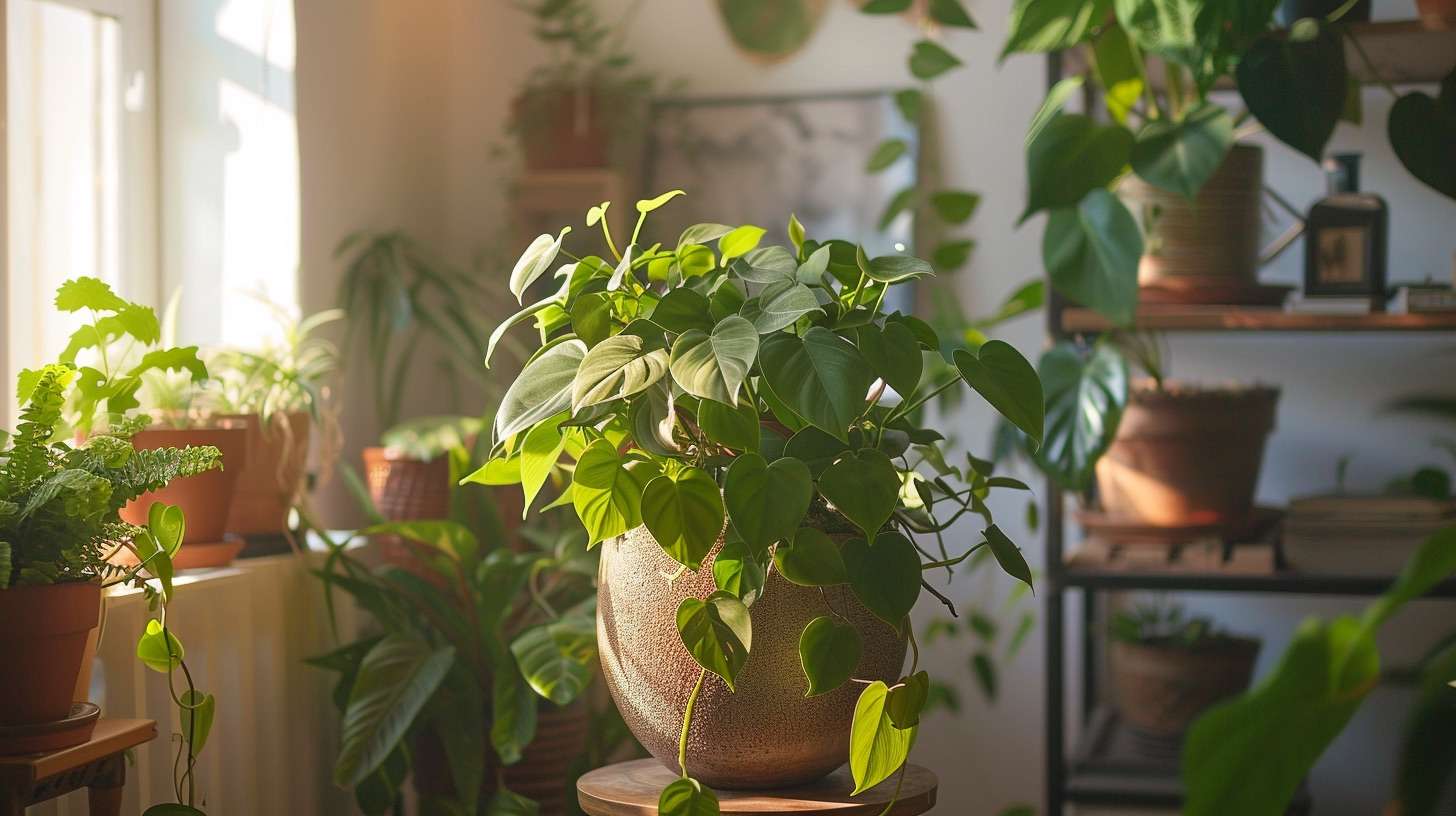
Exploring the Diverse Types of Pothos Plants: From Gorgeous Neon to Bold Jade
Before we get to all of the different types of pothos plants, first up, let’s talk about what a pothos plant is.
Pothos, scientifically known as Epipremnum aureum, is a genus of flowering plants that are native to the Solomon Islands. They are predominantly known for their lush, vine-like structure and their beautiful, heart-shaped leaves.
There are numerous varieties available, each with unique leaf patterns and colors. You’ll learn more about the different types of pothos plants later in this article.
Why Pothos Makes a Great Houseplant

Pothos plants make fantastic houseplants for several reasons.
First, they are incredibly easy to care for. They are tolerant of a wide range of light conditions, making them suitable for almost any room in your home. You can find more information on pothos plant light requirements in our detailed guide.
Second, pothos plants have air-purifying qualities. They can help to improve indoor air quality by removing toxins such as formaldehyde from the air. Learn more about the pothos plant benefits in our dedicated article.
Third, they are highly adaptable and can be grown in a variety of ways. You can let them trail from a hanging pot, train them to climb a moss pole, or even grow them in water.
And finally, pothos plants are excellent for plant newbies because they’re so easy to propagate. You can easily multiply your pothos collection by cutting a stem just below a node and placing it in water or soil. For a step-by-step guide, check out our article on how to propagate pothos.
So, if you’re looking to add a new plant to your indoor jungle, pothos is a great choice. Its versatility, easy-care nature, and aesthetically pleasing appearance make it a favorite among plant enthusiasts. Stay tuned for more detailed information on the various types of pothos and how to care for them.
Exploring the Different Types of Pothos Plants
Pothos plants, with their vibrant foliage and easy-care reputation, are ideal for both novice and experienced plant owners. But did you know there are several different types of pothos plants? Each variety has its own unique aesthetic, making them a delightful addition to any indoor garden. Let’s delve into some popular varieties.
Heartleaf Pothos
Heartleaf Pothos, also known as Epipremnum aureum, is one of the most common types. True to its name, this variety boasts heart-shaped leaves that are a rich green color. It’s a versatile plant that can thrive in a range of conditions, although it prefers indirect light. For more information on how to care for this variety, read our guide on pothos plant care.
Neon Pothos
As the name suggests, Neon Pothos is known for its vibrant, neon-green leaves. This variety can add a pop of color to any space. Like the Heartleaf Pothos, it also prefers indirect light and does well in a variety of conditions, making it another great choice for beginners. Check out our article on pothos plant light requirements for tips on how to provide the best lighting conditions for your plant.
Marble Queen Pothos
The Marble Queen Pothos is a striking variety known for its variegated leaves, which feature a mix of green and creamy white colors. This variegation can add a unique visual interest to your indoor garden. This variety may require a bit more care to maintain its variegation. For more information on caring for variegated varieties, visit our article on variegated pothos varieties.
Golden Pothos
The Golden Pothos, also known as Devil’s Ivy, is characterized by its heart-shaped leaves that feature splashes of golden yellow. This variety is a fast-grower and can easily adapt to a range of conditions. Despite its hardiness, it can benefit from regular fertilization. For tips on how to fertilize your pothos, check out our guide on pothos plant fertilization.
Jade Pothos
The Jade Pothos is another popular variety. This type has solid green leaves that are a bit more elongated compared to the Heartleaf Pothos. It’s a hardy plant that can tolerate lower light conditions, making it a good choice for less sunny spots in your home.
Each of these types of pothos plants can bring a unique aesthetic to your indoor garden. Whether you prefer the vibrant Neon Pothos or the variegated Marble Queen Pothos, there’s a pothos variety to suit every preference. And the best part? All these varieties can be propagated easily, allowing you to expand your indoor garden. For tips on how to propagate your pothos, visit our article on how to propagate pothos.
Caring for Your Pothos Plant
Taking care of your pothos plant isn’t a daunting task. With just a few tips and tricks, you can ensure your plant thrives. We’ll cover the ideal lighting conditions, watering schedule, and soil and fertilizer preferences for the different types of pothos plants.
Ideal Lighting Conditions
Pothos plants are quite versatile when it comes to light conditions. They can tolerate low light, but they thrive best in medium to bright indirect light. However, be careful not to expose them to direct sunlight as it can scorch their leaves. If you notice your pothos’ leaves turning yellow, it could be a sign of too much light. On the other hand, if the variegation on the leaves is fading, your plant might need more light. Learn more about pothos plant light requirements.
Watering Your Pothos
When it comes to watering your pothos plant, less is more. These plants prefer to dry out between waterings, so it’s best to water them thoroughly and then allow the top inch of soil to dry out before watering again. Overwatering can lead to root rot, a common issue for pothos plants. If you’re unsure when to water your pothos, wait until the leaves start to wilt slightly. This is a sign that the plant is thirsty and ready for a drink. Check out our detailed guide on pothos plant care for more information.
Soil and Fertilizer Preferences
Pothos plants do well in well-draining potting soil. They’re not too picky about the pH level, but a slightly acidic to neutral pH is ideal. A good-quality, general-purpose houseplant potting mix should be perfect. For more specific recommendations, check out our guide on the best soil for pothos.
As for fertilizing, pothos plants don’t require much. Feeding them with a balanced houseplant fertilizer every 2-3 months during the growing season (spring and summer) should be sufficient. Avoid over-fertilizing as it can lead to salt build-up and cause leaf burn. For more information on how and when to feed your pothos plant, visit pothos plant fertilization.
In short, with the right balance of light, water, soil, and fertilizer, your pothos plant can grow healthily and beautifully. Each variety of pothos may have slightly different care requirements, so make sure to familiarize yourself with the specific needs of your plant to guarantee it thrives.
Understanding Common Pothos Problems
Just like other houseplants, pothos plants can face certain issues. But don’t worry, most of these problems can easily be mitigated with a little knowledge and the right care. Here are some common issues you might encounter with your pothos plant, along with their possible causes and solutions.
Yellowing Leaves
Yellowing leaves can be a common sight in many types of pothos plants. This usually happens when your plant is getting too much water or not enough. Overwatering can lead to root rot, which in turn causes the leaves to turn yellow. On the other hand, underwatering can leave your plant dehydrated, leading to a similar yellowing effect.
To fix this, you’ll need to adjust your watering schedule, making sure to only water your plant when the top inch of soil feels dry to the touch. You can learn more about this in our pothos plant care guide.
Wilting or Droopy Leaves
If your pothos plant’s leaves are wilting or drooping, it might be a sign of stress from a lack of water or low humidity. This is usually more common in the winter months when indoor air tends to be drier.
Increasing the humidity around your plant can help resolve this issue. You can do this by placing a tray of water near your plant, misting the leaves regularly, or using a humidifier. Remember, pothos plants love a humid environment!
Leaf Spot
Leaf spot is a fungal disease that can affect different types of pothos plants. It’s characterized by brown or black spots that appear on the leaves. This problem is often caused by overwatering or poor ventilation.
To prevent leaf spot, ensure your pothos has plenty of air circulation and avoid splashing water on the leaves when you water the plant. If your plant is already affected, remove the diseased leaves and treat the plant with a fungicide.
Remember, every plant has its own set of needs and preferences. By understanding the common problems that can affect your pothos plant, you can take the necessary steps to keep it healthy and thriving. For more detailed information about pothos plant problems and how to solve them, check out our comprehensive guide on pothos plant problems.
Propagating Pothos
One of the many reasons pothos plants are popular among plant enthusiasts is their ease of propagation. There are two common methods you can use to propagate your pothos plant: cutting propagation and water propagation.
Cutting Propagation
Cutting propagation is the most commonly used method for propagating types of pothos plants. Here’s a simple step-by-step guide for you to follow:
- Choose a healthy stem and make a cut just below the node (the small bump that leaves grow from).
- Ensure that each cutting has at least two nodes. This is where the new roots will sprout from.
- Place the cuttings in a small pot filled with well-draining soil. Check out our article on the best soil for pothos to ensure you’re providing the ideal growing conditions.
- Water the cuttings thoroughly and place the pot in a warm area with indirect light. For more information on ideal lighting conditions, refer to our guide on pothos plant light requirements.
- Monitor the soil moisture levels regularly and water when the top inch of soil feels dry to the touch.
- After a few weeks, your cuttings should start to develop roots and new leaves will begin to grow.
Water Propagation
If you’re not in a hurry and enjoy watching the rooting process, water propagation might be the method for you. It’s not only easy but also a fun way to multiply your pothos collection. Here’s how you do it:
- Just like in the cutting propagation, you’ll need to make a snip on the stem just below the node.
- Place the cuttings in a jar of water, making sure the nodes are submerged. Change the water every few days to prevent bacteria growth.
- Place the jar in a warm area with indirect light. Remember, pothos plants don’t like too much direct sunlight.
- After a few weeks, you’ll start to see roots growing from the nodes. Once the roots are a few inches long, you can transplant the cuttings to soil.
Remember, patience is key when propagating pothos plants. It might take a few weeks to see progress, but the wait will be worth it when you see your new pothos plant thriving.
For more detailed information on this topic, check out our comprehensive guide on how to propagate pothos. In the meantime, enjoy the process and happy planting!