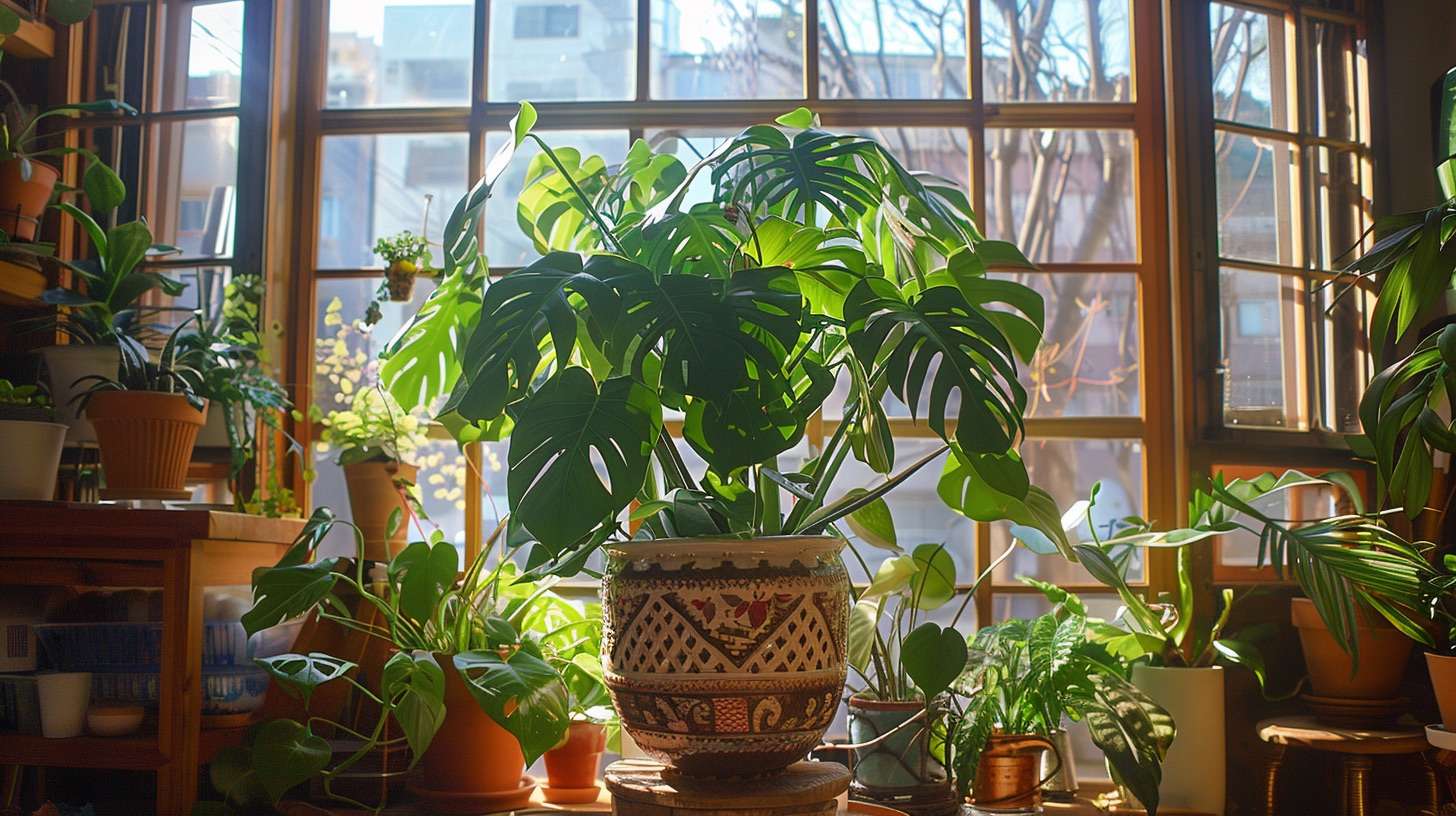
How to Care for a Rubber Tree Plant
The mighty rubber tree!
This is a great houseplant for a beginner because it’s super hardy and easy to care for, but it’s also a great plant for any plant parent. It’s one of the plants that help clean the air in your home so that’s always a bonus in our books.
These plants are hardy and easy to grow into a nice large houseplant so they’ll make a great addition to your home no matter what size you’re looking for.
Follow along for some tips on caring for your rubber tree plant. Yes it’s called a rubber tree or a rubber tree plant. Whatever you call it we’ve got the care guide for you.
Rubber Tree Plant Overview
As always, knowing the common name and the latin names make it easier to find the actual plant that you’re searching for. Sometimes it’s much easier to find information about the plant by the latin name – Ficus Elastica.
A rubber tree plant is a great addition to any bright corner in your home. It can grow into a small tree so it can really have a presence. It grows faster than an average houseplant, up to two feet each growing season, so it can be a fun one to grow.
In the wild a rubber tree plant is really a tree. It can grow up to 100 feet tall.
That’s definitely a tree not a plant.
Don’t worry though, your indoor rubber plant is not going to get that big.
How Big will my Rubber Tree Plant Get?
An indoor rubber tree will likely grow to around 8 feet tall in perfect conditions in a pot. That’s for a happy healthy plant.
This makes it a great size for inside a home. If you live in zone 10 or higher you can grow these outside as well. The rest of us can move them out to our patio’s and porches in the nicer weather!
The rubber tree is actually used to make rubber but it’s a different cultivar entirely. The houseplant that we’re all familiar with is the ficus elastica and the tree that actually produces rubber making sap is the hevea brasiliensis. (It’s why we need to learn the latin names)
This plant is part of the ficus family and you might be familiar with some of its cousins – the weeping fig or the fiddle leaf fig. Both have had fame on social media in previous years. We’ve got fiddle leaf figs in our homes because they are a challenge to grow but when you find the right spot for them it’s so rewarding!
The roots of this plant grow just as quickly as they grow tall so in the right setting outdoors they can be considered invasive. Not to worry with them in a pot in your house though.
One thing that is truly fascinating about the rubber tree plants is that they are used to form living bridges in certain parts of the world. They can technically be called a living root bridge but they are really formed by guiding the roots of the plants across a stream or river to build a bridge.
We found a neat history and some amazing photo’s of a real living root bridge. Or you can just google “living root bridge” and see some amazing photos!
Rubber Tree Care
Light
The rubber tree plant loves a bright indirect light. Just like so many of the plants you’ll find. That’s why it’s such a great houseplant.
It will grow near just about any window in your home.
One of the interesting things about this plant is that if its light intake is a bit lower it will actually make much larger leaves! They’ll make more surface area to get the light they need.
You’re most likely to notice this if you relocate your plant and the leaves are different sizes on the top or the bottom.
Temperature
Your rubber tree plant is comfortable in the same temps that you’re comfortable in. They’re tropical so they’re going to like to be between 60 to 80 degrees. Put them in that corner of your house that seems warmer than the rest of the room but isn’t right in the sun and they’ll flourish.
They make great patio plants in the summer time as long as you don’t leave them out when the nights start cooling off. They’re going to be really unhappy if it drops below 60 degrees and if it stays below 60 they’re not going to survive.
Water
These plants have a growing season like most plants. It’s easy to think of their growing season as the summer and their dormant season as the winter and that makes a watering plan a bit easier to handle.
They’re going to want a lot more water in their growing season (summer). Water them deeply and thoroughly when they’re ready. They definitely don’t like soggy feet so it’s best to stick your finger in the soil to test for dryness.
Be sure that they have good drainage and water can run out the bottom of your pot.
In their dormant season (winter) you can let them dry out a little. They’ll need to be watered a little less often, possibly every 2 weeks, but be sure to account for the drying effects of running your heater in the winter time as well.
You’ll also want to keep their leaves clean and free from dust so that they can keep the air clean in your space. There’s no need to use any kind of products on them, just a damp cloth to clear away any dust and make them shine will work.
Humidity
Remember that your ficus elastica is a tropical plant so it’s going to prefer more humidity but it will be just fine inside a home that you’re comfortable in. Just be sure if you’re running and a/c or heater that you account for the dryness when you water your plant and you’ll be fine.
If you like misting you can definitely give your rubber tree plant a spritz!
Soil
Like most plants, this one prefers to have well drained soil and doesn’t like to have soggy feet. Be sure that you’ve got a drainage hole in your container and line the bottom with small rocks or gravel to promote drainage.
The rubber tree plant is going to like a nice peat based potting soil. Most potting soils will work just fine for this plant as long as it has good drainage. You can always mix in some peat if you’d like. About 1/4 peat to 3/4 potting soil mix should give you a great mixture.
If you’re just starting out then any regular potting mix for houseplants will work just fine!
Fertilizer
The rubber tree plant only likes to be fertilized during its growing season so just plan on feeding it during the summertime. You can start during late spring and continue through the summer so that it has a good base for growth and leaf production.
Plan to fertilize every couple of weeks but use about half strength of what the commercial fertilizers recommend. You can use liquid or granular – whichever is easier for you to store and work with will be just fine.
Pruning
You may need to prune the rubber tree from time to time to keep its size in check or to keep it nice and full. These plants can become leggy if they don’t get the right amount of light.
You might also find that if you relocate him it may grow larger leaves on top than you have growing underneath. So you can prune for purely cosmetic reasons as well.
The ficus elastica does emit a milky sap when its pruned and it can be messy and attract pests. You’ll want to be prepared before you just start cutting back this plant.
It’s best to wear gloves when you’re working with this plant to avoid getting the sticky sap all over you, it’s definitely a messy situation!
Never remove more than about a third of a plants branches at any time. This can cause too much stress for a plant to recover so if your plant needs more pruning you’ll want to do it in stages.
Be sure to make your pruning cut above a leaf node (where the leaf meets the stem) or where a new stem branches away from the main stem.
The best time to prune is going to be right at the beginning of their growing season so late spring to early summer. If your plant is showing signs of distress or get’s knocked over it won’t hurt it to prune at that time, so don’t panic if this happens. We enjoy growing plants and most of them are far more forgiving than we think they will be.
How to Propagate Your Rubber Tree Plant
Once your rubber tree plant is happy and growing you may discover that it needs to be pruned occasionally or that you’d like to try your hand at making more rubber plants.
If you wan to try this then start with a cutting that’s about 6 inches long. You can start by pruning back a section of your plant to create a new one. Remove the leaves that are closest to the base and only leave 3-4 closer to the top. Then just pop the stem into some potting soil and cross your fingers!
This is a great time to remove that one branch that only has a couple of leaves on it without feeling guilty. Prune it down and make a new plant!
You’ll want to make your cut right below a leaf and you’ll also want to beware of the sap! Wear gloves so that you don’t get the sap on your skin.
The ficus elastic doesn’t need to be rooted in water, in fact it prefers not to be. You can trim your plant and put the cuttings right into fresh soil and they’ll start rooting. Well they’ll start soon.
If you’ve got some root hormone on hand it’s a great idea to dip your fresh cut in that before potting.
Your new baby is going to want to be baby’d a little bit. It will need moist soil and a warmer spot to get it growing and happy. These new baby’s love a nice humid greenhouse but that doesn’t mean you can’t try this at home!
You should have roots after the first month, but don’t panic if it takes longer than that as long as your stem seems healthy. If it’s unhappy then it’s okay to pitch it and try again.
We’ve had successes and failures when we root plants and sometimes there’s just no explanation why one does great and the other doesn’t!
How to Repot Your Rubber Tree Plant
This is one of those amazing plants that will tell you when it’s ready for a new pot. Our favorite kind of plants are the ones that make it easy to figure out what they need!
A happy rubber tree plant will grow pretty quickly and may need a new pot every year or two. This is one of the reasons they are a popular houseplant, because they’re easy to grow and they grow quickly.
When this plant has outgrown its pot you may see roots on the surface. So if you’re watering and those roots are coming up through the soil it’s definitely time for a new pot. If the soil is pulling away from the sides of your pot it may mean that the roots are getting crowded in there.
One of the other things it might do is start lifting itself out of the pot. Like the roots are just pushing it upward and it’s trying to climb out. You’re going to need to find a new, larger pot in this situation too!
If your ficus elastica is not coming out of its pot easily you can run a knife gently around the edges to loosen it. Then just remove it from its pot and place it in the new one.
If you’ve got roots growing out the top you can trim them back. These plants can send out some aerial roots but they don’t need them as a houseplant. Use a clean cutting tool to trim them back toward their main trunk.
Place the root ball about a half inch below the surface of the soil when you’re replanting. Then give them a nice big drink of water and let them drain.
Be sure that you’re only moving up a size in a pot because if you move into a way larger pot you’re setting yourself up to have problems!
Rubber Tree Plant Problems
The rubber tree plant is an easy to grow and hardy houseplant. Overall you’ll see few problems with this plant but it still can be the target of a few pests. If you’ve got a nice healthy plant you shouldn’t have any problems but here’s what to watch for.
Pests of the Rubber Tree Plant
Spider Mites, aphids and mealy bugs are the most common pests that can terrorize you and your houseplants. These are the same basic ones that can afflict any houseplant and they are the common ones that you might find on your rubber tree plant.
If you see any of these on your plant be sure to quarantine your plant to keep them from spreading!
You can try removing them by hand if its an early infestation, but we have found that it’s pretty hard to determine a pest until it’s visible, and by then it can be past the “early” stage.
Horticultural soap or Neem Oil, is one of the best ways to get rid of pests. It’s also stinky so keep that in mind, you don’t want to get it on your clothing or even your hands.
We’ve used a small paintbrush and rubbing alcohol to get down into the smaller sections of plants and kill the mites.
It might not seem like it happens quickly but the sooner you start treating an infestation the sooner you can overcome it.
It’s also a good idea to see if you can figure out what caused the infestation. Did you introduce a new plant that was infested? Over watering? Were your plants outside and you brought them back inside?
Diseases of the Rubber Tree Houseplant
This is one of those plants that’s doesn’t really have diseases that plague it. The most common one is the one that we cause by overwatering and poor drainage – root rot.
This one is easier to prevent than it is to cure. Be sure that you allow your plant to drain when you water it and avoid overwatering. Prevention is the cure for this one!
Now you’re ready to raise up a happy and healthy Rubber Plant Tree!
Are you looking for other plants that are great for beginners? Be sure to check out our Guide!
Rubber Tree Plant Quick Overview Chart
| Common Name(s) | Rubber Tree, Rubber Tree Plant, Rubber Fig |
| Scientific Name | ficus elastica |
| Family | Moraceae |
| Origin | South and Southeast Asia |
| Height | Up to 10 feet (as a houseplant) |
| Light | Bright, indirect light |
| Water | Average (seasonal) |
| Temperature | 60-80°F |
| Humidity | Average |
| Soil | Well-draining potting mix |
| Fertilizer | Monthly (seasonal) |
| Propagation | Stem |
| Pests | Mealy bugs, spider mites |